





Disconnected Security Data
Makes Prioritization Harder
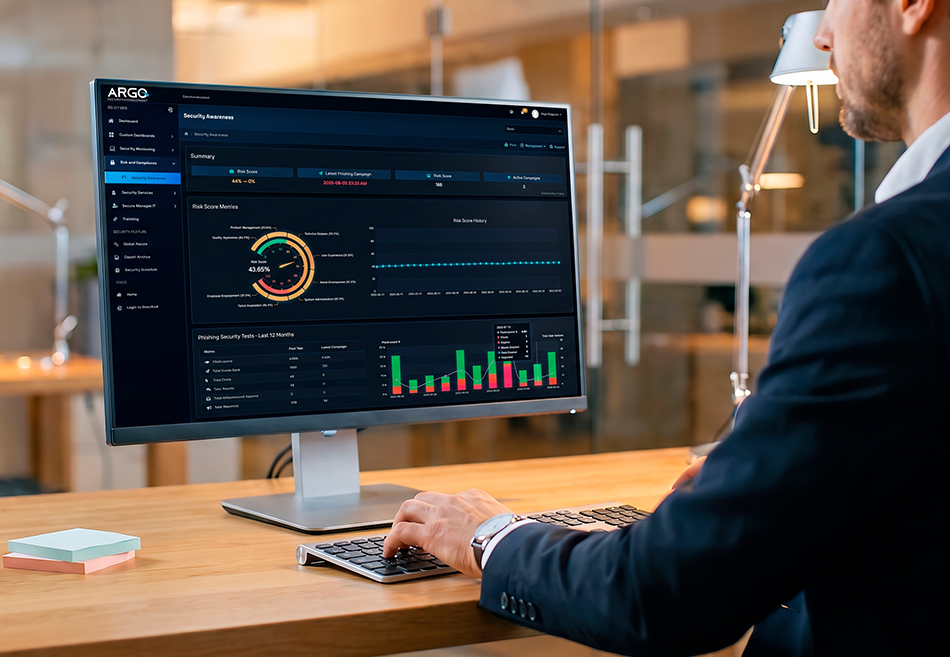
Argo Security Management gives security leaders a unified view of their cybersecurity program by bringing together information from SIEM, MDR, XDR, vulnerability management, external exposure management, asset management, GRC, and other tools and services.
By connecting findings, asset context, and operational data across the environment, Argo helps teams see what changed, where risk is concentrated, whether controls are working, and where to focus next. Teams can make those decisions without piecing together manual reports or moving between disconnected dashboards.
Who Is Argo For?

Security
and IT
Leaders
See where risk is concentrated and where teams and resources should focus.

Risk and
Compliance
Teams
Connect controls, assessments, findings, and asset context to better understand program risk.

Security
Operations
Teams
Spend less time moving between dashboards and more time addressing higher-priority issues.

Teams Managing Complex Environments
Use inputs from existing tools and services without replacing the investments already in place.
What Does Argo Connect?
Security
Operations
Asset
Intelligence
Risk and
Compliance
Vulnerability and
Exposure Management
Infrastructure and
Managed Services
Security Testing
and Training
How Does Argo Help?
Create a Unified View
Argo aggregates and curates information from across the environment so security leaders can understand how tools, services, controls, and assets relate to one another.
Prioritize the Right Work
Asset-level context helps teams focus on the issues that carry the most risk, not just the findings that appear first in a queue.
Reduce Manual Reporting
Argo provides a consistent way to review trends and share updates without pulling information from separate portals, spreadsheets, and reports.
Guide Security Investment
Leaders gain the context to evaluate risk, track progress, and direct resources where they can have the greatest effect.
Align Teams Around Risk
Security, IT, compliance, and leadership teams work from a consistent view of risk, remediation status, and priorities.
Designed for Practical Security Decisions
CISO Global security professionals developed Argo to solve a familiar problem: teams have plenty of security data but often lack a practical way to turn it into action.
Four Principles Guide the Platform
Connected Visibility
Security information should be accessible, current, and easier to use than static reports or disconnected spreadsheets.
Data Curation
Argo surfaces the information teams need to understand risk without forcing them to sort through unnecessary noise.
Intuitive Navigation
Teams can move from a high-level view into more detailed information when they need to investigate, validate, or report on an issue.
Data Science and AI
Argo uses data science and AI to identify patterns, connect related risk signals, and highlight changes that may require attention.

Asset Context Changes the Risk Conversation
Not every finding deserves the same response.
The same vulnerability can carry very different risk depending on the asset it affects. Argo helps teams weigh findings against asset importance, threat activity, and business impact so they can focus remediation on higher-risk assets.
Teams can then explain remediation decisions and allocate resources more deliberately.

Why Argo?
Most security tools provide visibility into one part of the environment. Argo works across the tools and services already in place, connecting security, IT, compliance, asset, and operational information into a broader view of the cybersecurity program.
Argo then applies curation and asset context to help teams understand what matters most and where to focus next.

Turn Security Data Into Clearer Priorities
See how Argo connects security information, adds asset context, and helps your team decide what to address first.
Frequently Asked Questions
What is Argo Security Management?
Argo Security Management is a cybersecurity management platform that brings together information from security, vulnerability and exposure management, asset management, compliance, IT, and other operational sources. It helps teams understand risk across the environment, identify what has changed, and focus on higher-priority actions.
Who should use Argo?
Argo is designed for security, IT, risk, and compliance teams that manage information across multiple tools and need a clearer way to understand risk, prioritize work, and communicate security program performance.
Does Argo replace existing security tools?
No. Argo works with existing tools and services. It brings information from those sources into a more usable format so teams can better understand priorities and take action.
How does Argo help teams prioritize risk?
Argo connects findings with asset context, threat activity, business impact, and other security program information. This helps teams determine which issues carry the most risk and where remediation should begin.
How is Argo different from a standard dashboard?
Many dashboards show information from a single tool or part of the environment. Argo connects information across security, IT, compliance, asset, and operational sources, then adds curation and asset context to help teams understand what matters most and where to focus next.
Can Argo support compliance and reporting?
Yes. Argo helps teams review security and compliance information in one place, track trends, and prepare more consistent updates for leadership, auditors, and internal stakeholders.