

Protect Operations That Cannot Afford Downtime
Energy companies and utilities operate systems that need to be available around the clock. Corporate networks, cloud platforms, operational technology, industrial control systems, field equipment, and remote sites may all play a role in producing, managing, or delivering essential services.
Many of those systems were built for reliability and long service lives, not for today’s cybersecurity threats. At the same time, IT and operational environments are becoming more connected, giving organizations better access to information but also creating more connections that must be protected.
Cybersecurity for energy and utilities must account for the availability, reliability, and safety requirements of operational systems.
CISO Global helps organizations secure the supporting IT environment and prepare for cyber incidents that could affect essential services.

Cybersecurity Challenges in Energy and Utilities
IT and Operational
Technology
Legacy Systems
and Equipment
Third-Party and
Vendor Access
Identity and
Privileged Access
Distributed
and Remote
Infrastructure
Ransomware
and Operational
Disruption
Limited Visibility
Across the
Environment
How CISO Global Helps
Energy and Utility Organizations
CISO Global helps energy companies and utilities strengthen cybersecurity while accounting for the operational requirements of critical systems.

Assess Your
Security Gaps
Risk and Gap Assessments, penetration testing, and vulnerability management help identify weaknesses across networks, applications, cloud environments, and externally exposed systems.

Monitor and Respond
to Threats
CISO Global’s AI-Powered SOC provides 24/7/365 US-based SOC monitoring, including nights, weekends, and holidays. Analysts investigate suspicious activity and support response through Managed Detection and Response, Managed SIEM, and Managed XDR, based on your service scope.

Secure IT and
Cloud Environments
Critical operations also depend on traditional IT. CISO Global’s Secured Managed Services can help manage networks, firewalls, endpoints, and cloud environments, along with patching, backups, and other IT needs that support business and operational functions.

Manage Risk
and Compliance
Energy companies and utilities may need to address regulatory, contractual, customer, insurance, and internal security requirements. Managed GRC can help establish security policies, manage third-party risk, document controls, and track those requirements.

Prepare for
Cyber Incidents
Incident response planning and tabletop exercises help teams clarify roles, communications, and recovery steps before a real incident occurs.
Bring Security Findings Together
Energy and utility organizations may rely on different teams, tools, and service providers to manage security. That can make it difficult to see what has changed, where risk is concentrated, and which issues need attention first.
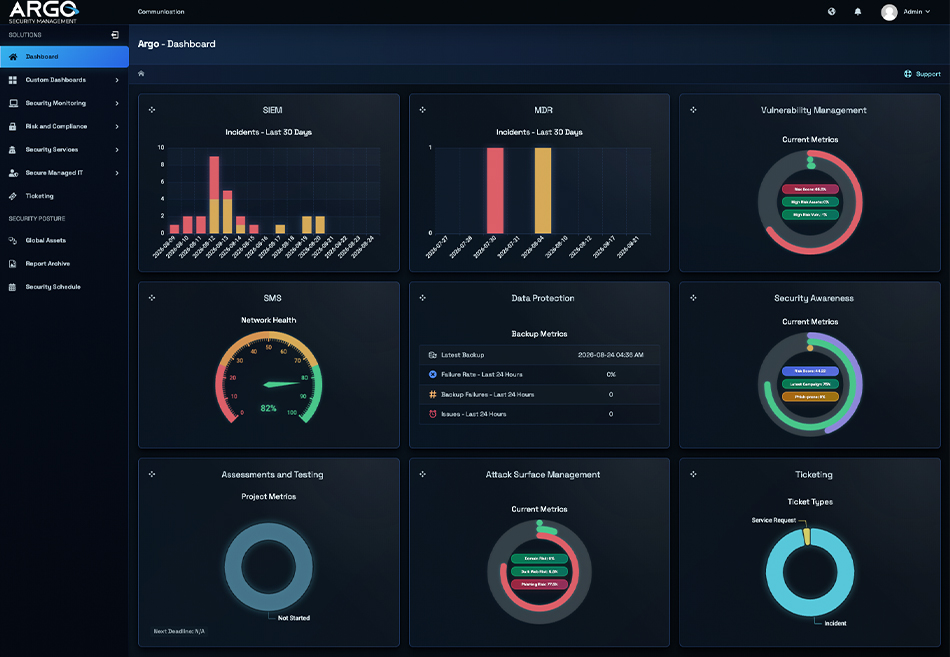
Argo Security Management connects findings and context from SIEM, MDR, XDR, vulnerability management, external exposure management, asset management, and other cybersecurity tools and services.
Security leaders can review those findings together without relying on separate dashboards and manual reporting.
Why Energy and Utility Organizations Work With CISO Global
Security and IT Expertise
Security That Accounts for Operations
Support Across Multiple Sites
Extend Your Internal Team
Let’s Talk About Your Security Priorities
Speak with a CISO Global cybersecurity expert about your business systems, remote access, and security priorities across operating locations.
Frequently Asked Questions
What is the difference between IT and OT cybersecurity?
IT security focuses on systems such as networks, endpoints, applications, and business data. Operational technology (OT) includes systems and equipment that monitor or control physical processes. OT security has to account for operational requirements such as availability, reliability, and safety, so the same security practices used in a traditional IT environment may not always be appropriate. NIST specifically calls out these differences when addressing OT security.
How should cybersecurity assessments and testing be handled in an operational environment?
Assessments involving operational environments need to be carefully scoped around the systems involved and their reliability, availability, and safety requirements. Testing approaches that are appropriate for corporate IT may need to be modified when operational systems or critical equipment are involved.
How can energy and utility organizations manage cybersecurity risk from third parties?
Start by identifying which contractors, vendors, equipment manufacturers, and service providers can access critical systems or sensitive information. Organizations should understand why that access is needed, limit it appropriately, and review it as relationships and responsibilities change.
How can energy and utility organizations prepare for a cyber incident?
Incident response planning should account for the people and systems involved in both business and operational environments. Tabletop exercises can help security, IT, operations, leadership, communications, legal, and other stakeholders work through roles and decisions before an actual incident occurs.